Workwear Functional Knit Fabric: Easy-Wash, Water-Repellent, and UV Spec Guide
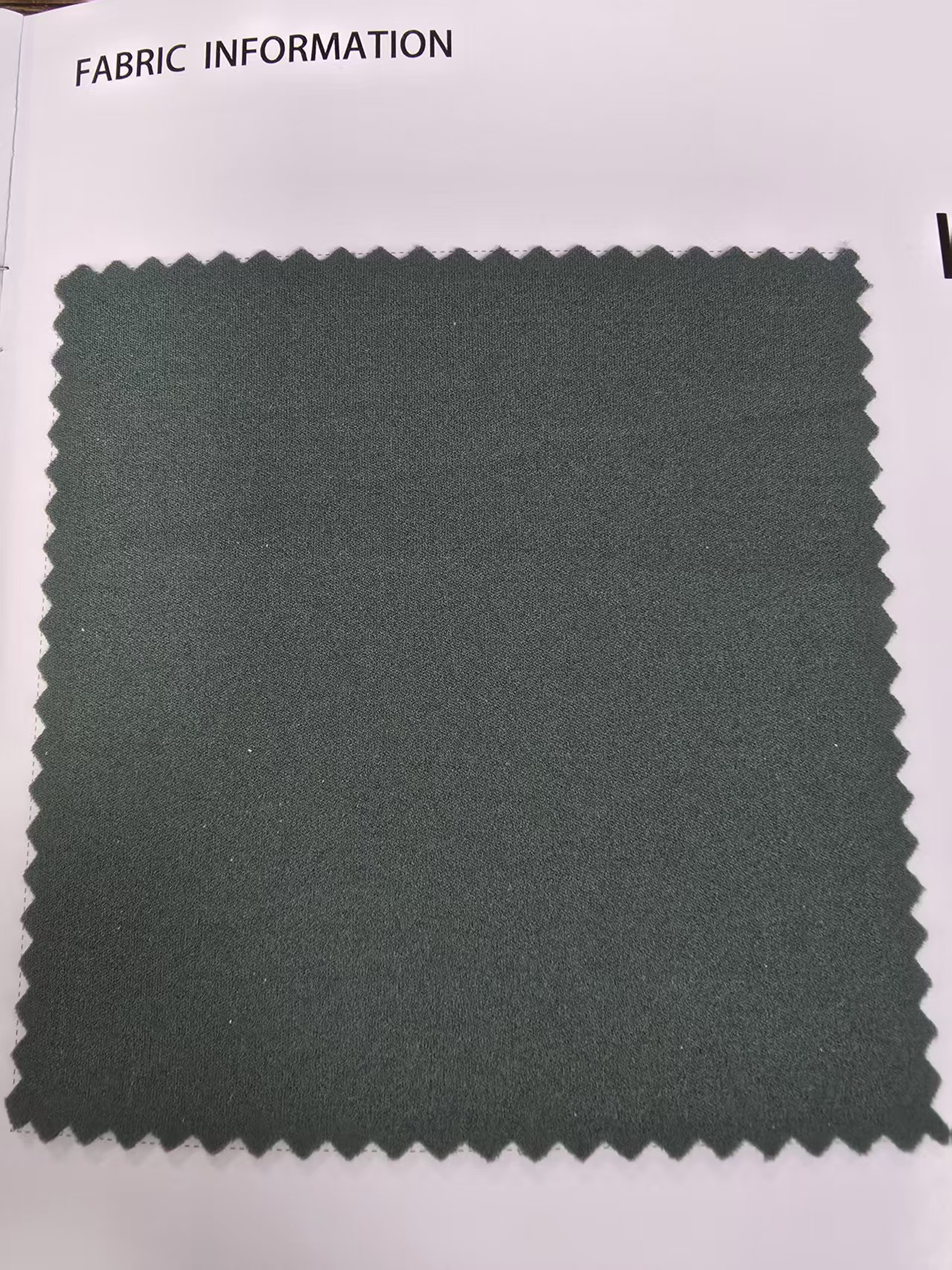
A workwear or uniform programme asks one fabric to do several jobs at once: survive repeated laundering, shed light rain and spills, block UV exposure during outdoor shifts, and stay comfortable through a long working day. Most sourcing delays happen where those requirements have to become numbers on a fabric specification. A brief built on adjectives - durable, easy-care, UV-protective - cannot be knitted, dyed or tested. A brief built on parameters - nylon/spandex knit, moisture-wicking, 4-way stretch, UV protection, water-repellent finish, easy-wash, sample approved before bulk - can.
This guide covers that translation step. It uses EKWP2270-D6, a nylon/spandex functional knit intended for workwear and uniform applications, as the working example, and it sets out the parameters buyers should confirm before placing a bulk order. The manufacturer behind the EKING fabric range is E-king Textile (Zhangjiagang E-king Textile Co., Ltd.), a China-based knitted textile enterprise founded in 2011 and located in Zhangjiagang, Jiangsu Province, which serves functional knit fabric customers in the European Union and the United States.
Problem Definition: Why Workwear Fabric Briefs Break Down Before Sampling
Workwear and uniform fabric sourcing fails in predictable places. Four of them account for most of the rework between brief and bulk.
Adjectives instead of parameters
"Easy-wash" can mean that a garment needs no ironing, or that a finish must still work after repeated industrial laundering. "Water-repellent" can mean that light rain beads off the surface, or that the fabric must pass a defined test standard. Until the test method, the target value and the acceptable limit are named, a mill can knit, dye and finish the fabric but cannot confirm the fabric meets the programme. This is the most common cause of late-stage specification changes.
Knit or woven chosen by habit instead of by garment zone
Knitted fabric has good stretch, breathability and moisture transfer performance, high elasticity and a soft handfeel, but lower structural stability, which makes it suitable for close-fitting apparel. Woven fabric holds its shape, resists abrasion and wears well, but has low stretch and relatively poor moisture transfer next to the skin, which makes it a better fit for outer shell garments than for quick-dry next-to-skin layers. A uniform programme normally uses both: knit for the base or shirt layer, woven for the outer shell. The specification question is which zones get which construction, not which one wins.
Finishes treated as independent add-ons
Antibacterial, anti-odor, UV-protective, water-repellent and easy-wash effects are finishing treatments applied to a base fabric. The base determines how much of a treatment the fabric can carry and how it behaves afterwards: yarn composition, knit structure, and the dyeing and finishing route all matter. Specifying a finish without specifying the base that carries it leaves a gap that only appears during testing.
Verification scheduled after bulk instead of before it
Functional properties are cheapest to confirm at sample stage. Once the fabric has been dyed and finished in bulk quantity, changing a treatment or a base construction means restarting the run - which is why sample approval ahead of bulk manufacturing matters in functional fabric programmes.
Industry Background: Where Functional Knit Demand for Uniforms Comes From
Functional knit fabric sits inside a large textile category that continues to expand. Fact.MR projects the global performance knitted fabrics market - knitted fabrics engineered for athletic, outdoor and medical end uses - to reach USD 8.58 billion in 2026, with a forecast period running to 2036. Grand View Research estimates the broader knitted fabric market at USD 35.7 billion by 2025, growing at a CAGR of 6.0%. China's exports of knitted fabrics reached approximately USD 21.2 billion in 2024, according to Ken Research.
The segments closest to workwear are growing as well. Research and Markets expects the global moisture wicking fabrics market to reach USD 3.99 billion by 2030 at a 6% CAGR, and SNS Insider projects the recycled textiles market at USD 6.32 billion in 2025, growing at a 4.70% CAGR to 2035. For uniform buyers, the practical reading is that functional knit supply is competitive, and that recycled options are now part of ordinary specification conversations rather than a niche request.
Regulation is moving on the same timeline, and it touches water-repellent finishing directly. OEKO-TEX introduced a limit value for Total Fluorine (TF) of 100 mg/kg under STANDARD 100, effective 1 January 2024, aimed at PFAS compliance. In the United States, California's AB-1817 bans regulated PFAS in textiles at a total organic fluorine threshold below 100 ppm from 1 January 2025, tightening to below 50 ppm in 2027. A workwear brief that specifies water repellency therefore has a compliance dimension that must be agreed with the fabric supplier before sampling, not after.
Detailed Solution: EKWP2270-D6 as a Workwear Functional Knit
EKWP2270-D6 is a functional knit fabric made of nylon and spandex as its primary materials. It belongs to the sports functional fabrics, outdoor functional fabrics and recycled functional fabrics categories, and it is designed for sports and activewear, outdoor apparel, casual and fast fashion, underwear and functional close-fit garments, and workwear and uniform applications. Its parameter list covers moisture-wicking; 4-way stretch and high elasticity; breathable and quick-dry behaviour; antibacterial and anti-odor treatment; UV protection; water-repellent finishing; easy-wash; recycled material options; wrinkle resistance; and cool-touch or warming treatments.
For a workwear buyer, the useful question is not how long that list is, but how the parts interact and which of them can be confirmed. The sections below follow the order in which most uniform briefs raise these points.
Base construction: nylon with spandex
Nylon contributes strength, abrasion tolerance and colour depth for garments that are worn hard. Spandex contributes the recovery that keeps the fabric from bagging at knees and elbows. Because both components sit in the base yarn rather than in a topical treatment, stretch and recovery are built into the fabric itself. Buyers should confirm the spandex content and the required stretch and recovery targets instead of accepting "stretch" as a specification.
Moisture wicking, breathable and quick-dry behaviour
Moisture management in a knit fabric comes from the combination of yarn composition and knit structure, supported by finishing. Moisture wicking and quick drying is one of the functional treatments in E-king Textile's range, and moisture wicking and quick drying fabrics are among its main functional knit products. In workwear, this behaviour matters most in the layer worn against the skin and in garments worn across changing temperatures during a shift.
4-way stretch and comfort
Four-way stretch is listed among the EKWP2270-D6 parameters, and high elasticity is part of how the fabric is positioned. In a uniform programme, stretch is a durability decision as much as a comfort decision: fabric that recovers after a worker crouches or reaches overhead holds its shape for longer in service. Specification should therefore cover both stretch and recovery, because a fabric that stretches but does not recover behaves differently after a season of wear.
Antibacterial and anti-odor finishing
Antibacterial and odor control is one of the functional treatments offered in the supplier's finishing range, and antibacterial and odor control fabrics are among its main functional knit products. The treatment is applied to a base fabric, so yarn composition still drives how the fabric feels and performs. E-king Textile cooperates with POLYGIENE, alongside yarn and fibre partners including Hengli Group, Shenghong Group, Invista, Creora Group and Huafeng Group. A buyer specifying anti-odor performance should confirm which treatment route will be used, and what evidence the supplier will provide that the treatment withstands the laundering regime the uniform will actually see.
UV protection finishing
UV protection appears both in the EKWP2270-D6 parameter list and in the supplier's functional treatment range. For outdoor workwear, the fabric is one part of the protection strategy alongside garment coverage and design. At specification stage, the fabric element should be pinned down through a named test standard and an agreed acceptable limit, rather than assumed from the phrase "UV protection".
Water-repellent finishing and chemical constraints
Water repellency is a finishing effect, which makes it the parameter most exposed to regulatory change. OEKO-TEX's Total Fluorine limit of 100 mg/kg under STANDARD 100 has applied since 1 January 2024, and California's AB-1817 sets a total organic fluorine threshold below 100 ppm from 1 January 2025, tightening to below 50 ppm in 2027. E-king Textile can customize functions per brand requirements - including PFAS-free processing, specific antibacterial agents and recycled materials - but the company's application notes state that clear technical specifications and testing standards are needed for development and validation. In practice, when water repellency is in the brief, the finish chemistry and its compliance route belong in the sample request.
Easy-wash finishing
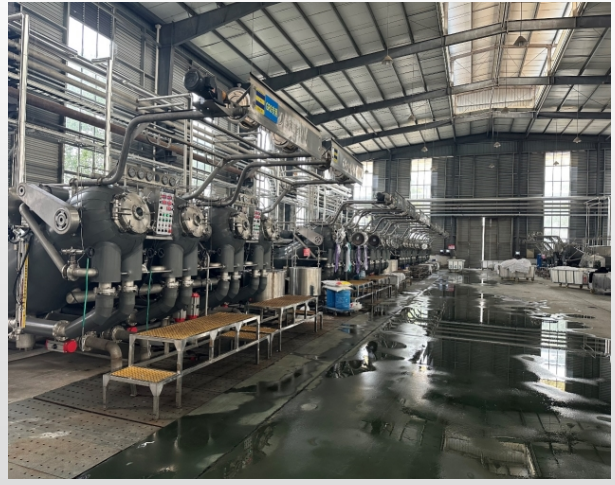
Easy-wash is one of the properties listed for EKWP2270-D6, and easy-wash and quick-dry finish options are part of the range that supports mass garment production. In uniform programmes, easy-wash usually stands for several requirements at once: finish durability through repeated laundering, shape retention, and wrinkle resistance, which is also listed among the fabric's parameters. Because laundries and wash regimes differ between markets, the buyer should state the actual wash conditions rather than relying on the term alone. Continuous supply matters here too: E-king Textile's own dyeing factory has been in production since March 2022, which supports continuous production and replenishment of functional knit fabric.
Recycled material options
EKWP2270-D6 sits in the recycled functional fabrics category and lists recycled material options among its parameters. Recycled content is not a single specification, so buyers should confirm the recycled content definition, the documentation the supplier will provide, and how the recycled route affects the other parameters in the brief. Elsewhere in the same range, EKWP1912-DSP is made of nylon spandex or recycled nylon spandex and is intended for sports/activewear, outdoor apparel and casual/fast fashion, while 20ETW1028-DSP is made of poly/spandex, carries UV protection, water-repellent and easy-wash properties, and is intended for use with commonly synthetic and recycled fibers.
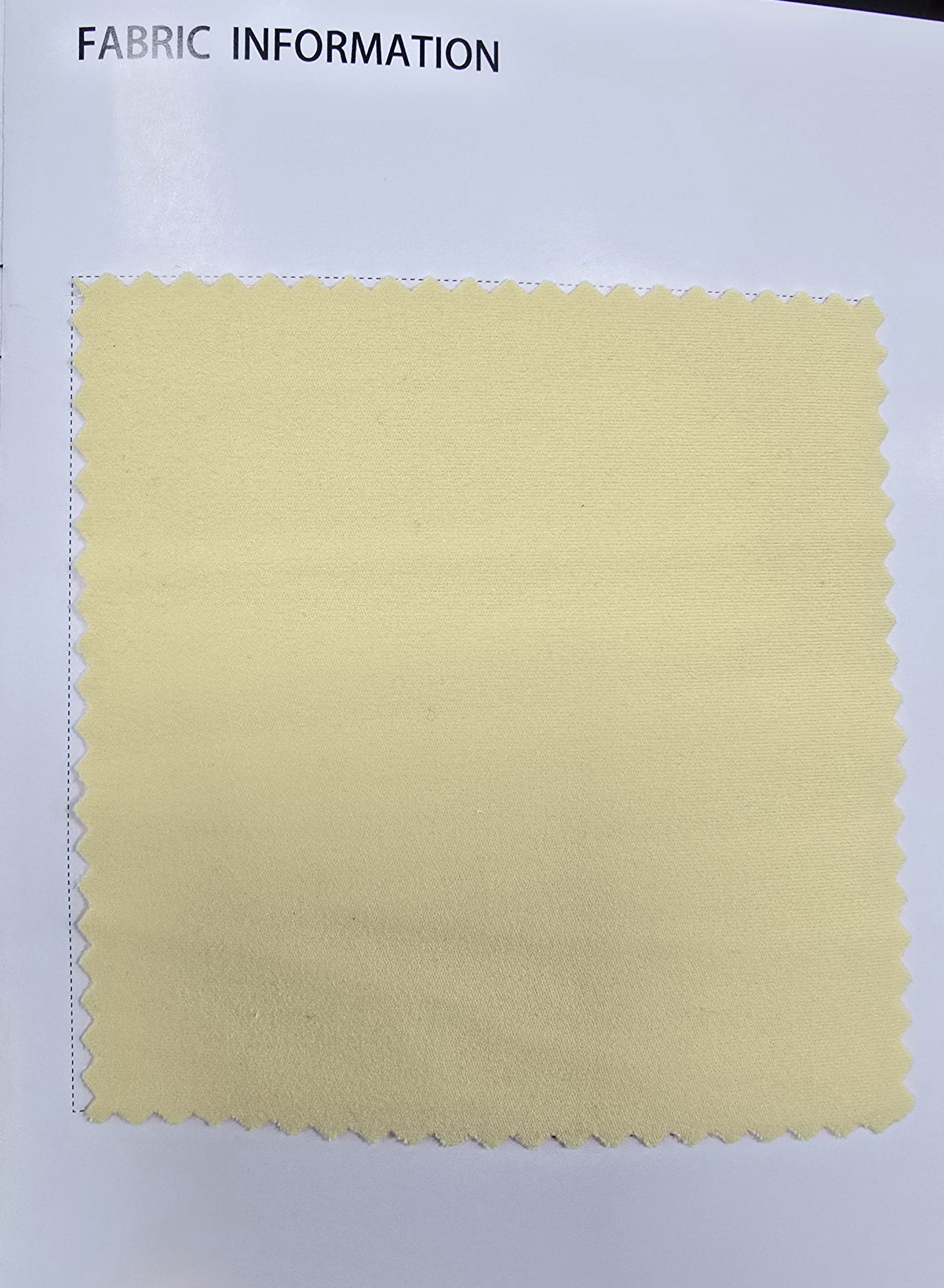
Step-by-Step: Turning a Workwear Brief into a Knit Specification
- Define the working conditions first. Record where the garment is worn and what it has to survive: high activity and sweat, variable outdoor climates, or everyday use where easy-wash, quick-dry and durability matter most. This decides which functional parameters are essential and which are optional.
- Split the brief by garment zone. Assign knit construction to next-to-skin and stretch-dominated zones, and woven construction to outer shell zones where shape retention and abrasion resistance dominate. A single uniform programme can carry both.
- Convert each requirement into a property, a test standard and a limit. Easy-wash, UV protection and water-repellent finishing each become a named test method and an acceptable result, agreed in writing before sampling.
- Select the yarn composition. Nylon/spandex for strength, recovery and next-to-skin comfort; nylon spandex or recycled nylon spandex where recycled content is a requirement; poly/spandex where the property priority is different. Confirm the spandex content behind the required stretch and recovery.
- Select the finishing route and check chemical constraints. Decide which available treatments apply - antibacterial and odor control, moisture wicking and quick drying, UV protection, water-repellent, stain and oil prevention, anti-static, thermal storage and warmth preservation, or cooling treatment - and confirm the chemistry against the compliance limits that apply in the destination market.
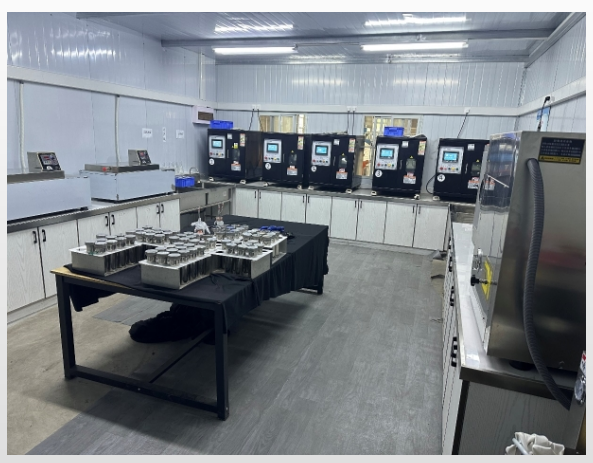
- Validate at sample stage. Sample approval ahead of bulk manufacturing is how functional fabric programmes are run. E-king Textile operates an internal laboratory for fabric testing alongside its own knitting factory, so finishes and properties can be checked before a bulk quantity is committed.
- Lock the parameters for repeat orders. Record the approved construction, finish route, colour and test results in the specification, so replenishment orders run against a fixed reference.
Use Cases: Where Workwear Knit Parameters Earn Their Place
EKWP2270-D6 is designed for workwear and uniforms alongside sports and activewear, outdoor apparel, casual and fast fashion, and underwear or functional close-fit garments. In practice, uniform programmes draw on it in several ways.
Uniforms with frequent laundering. Where garments are washed often and returned to service quickly, easy-wash and quick-dry finishing, wrinkle resistance and moisture management carry most of the value.
Outdoor and field workwear. Where workers spend shifts outdoors in variable weather, UV protection, water-repellent finishing and breathable quick-dry behaviour are specified first - together with the compliance route for the repellent chemistry.
Base layers worn under workwear. Where the knit sits against the skin, moisture-wicking, 4-way stretch, soft handfeel and antibacterial or anti-odor treatment determine whether the layer stays comfortable across a full shift.
Recycled-content programmes. Where a uniform programme carries a material-sourcing target, the recycled functional fabrics category and recycled material options allow the same construction family to be specified with recycled content.
Climate-specific variants. Cool-touch or warming treatments allow one base construction to be adapted to hot-weather and cold-weather uniform deployments.
Comparison Table: Requirement, Parameter and What to Confirm
| Workwear requirement | Fabric parameter / treatment on EKWP2270-D6 | What the buyer should confirm |
|---|---|---|
| Survives repeated laundering | Easy-wash; wrinkle resistant | The actual wash regime and the finish durability expectation, validated on a sample |
| Rain and spill protection | Water-repellent finishing | Finish chemistry, including a PFAS-free route, and alignment with OEKO-TEX TF and AB-1817 limits |
| Sun exposure on outdoor shifts | UV protection | Named test standard and agreed acceptable limit |
| Sweat management | Moisture-wicking; breathable / quick-dry | Layer position (next-to-skin or outer) and the test method used |
| Freedom of movement | 4-way stretch / high elasticity | Stretch and recovery targets, and the spandex content behind them |
| Odour control over a shift | Antibacterial / anti-odor treatment | Treatment route, and evidence that it withstands the laundering regime |
| Sustainability targets | Recycled material options | Definition of recycled content and the documentation provided |
| Hot or cold deployment | Cool-touch or warming treatments | Which treatment applies, and how it is validated on the finished fabric |
| Garment-zone construction | Nylon and spandex knit base | Which zones use knit versus woven, and the structural stability expected |
The table maps workwear requirements to parameters listed for EKWP2270-D6 and to E-king Textile's functional finishing range. Test standards and acceptable limits are agreed between buyer and supplier for each programme.
Frequently Asked Questions
How do water-repellent finishes on workwear knit fabric relate to PFAS rules?
Water repellency on a knit fabric is delivered by a finishing treatment, so the chemistry of that treatment is subject to chemical regulation. OEKO-TEX set a limit value for Total Fluorine (TF) of 100 mg/kg under STANDARD 100, effective 1 January 2024, targeting PFAS compliance. California's AB-1817 bans regulated PFAS in textiles at a total organic fluorine threshold below 100 ppm from 1 January 2025, tightening to below 50 ppm in 2027. E-king Textile can customize functions per brand requirements, including PFAS-free processing, but clear technical specifications and testing standards are needed for development and validation.
Which functional properties can EKWP2270-D6 deliver for workwear and uniforms?
EKWP2270-D6 is a nylon/spandex functional knit. Its parameter list covers moisture-wicking, 4-way stretch and high elasticity, breathable and quick-dry behaviour, antibacterial and anti-odor treatment, UV protection, water-repellent finishing, easy-wash, recycled material options, wrinkle resistance, and cool-touch or warming treatments. It is designed for sports and activewear, outdoor apparel, casual and fast fashion, underwear and functional close-fit garments, and workwear and uniform applications. Because these effects come from the interaction between the nylon/spandex base and the finishing treatment, each specified property should be confirmed with a test standard at sample stage.
Can EKWP2270-D6 be supplied with recycled material options?
Yes - recycled material options are listed among the EKWP2270-D6 parameters, and the fabric belongs to the recycled functional fabrics category alongside sports functional fabrics and outdoor functional fabrics. Recycled content needs definition: buyers should confirm what the recycled content consists of, what documentation the supplier provides, and how the recycled route affects the other parameters in the specification. Other models in the same range also address this: EKWP1912-DSP is made of nylon spandex or recycled nylon spandex, and 20ETW1028-DSP is intended for use with commonly synthetic and recycled fibers.
What should be confirmed before a bulk order of workwear knit fabric?
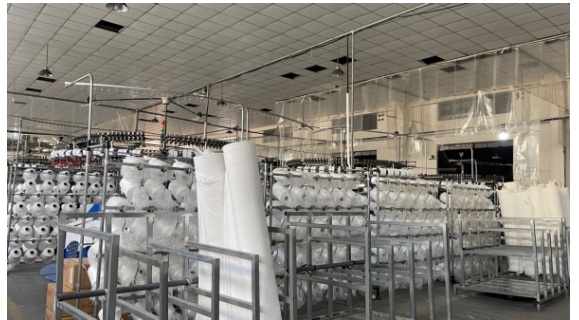
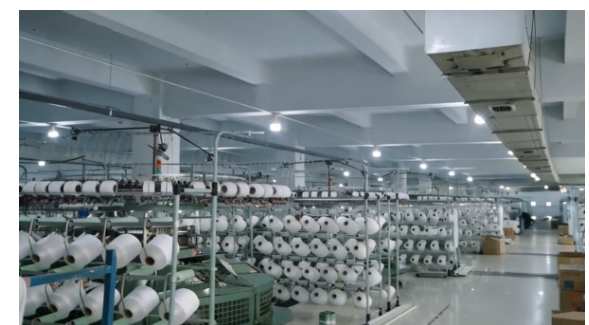
Before bulk, confirm the construction and model, the full functional property list with a named test standard and limit for each property, the finishing chemistry and its compliance route for the destination market, the colour and dyeing route, and the stretch and recovery targets. Then approve a sample before bulk manufacturing begins. E-king Textile operates its own knitting factory, a complete chain from weaving to dyeing and finishing, and an internal laboratory for fabric testing, and its dyeing factory has been in production since March 2022, which supports repeat-order consistency.
How should buyers evaluate functional knit fabric manufacturers?
Look for evidence that the production chain is under the supplier's own control, because functional properties depend on how knitting, dyeing and finishing interact. Useful checkpoints include whether the supplier operates its own knitting factory, whether it has in-house fabric testing, how much development capacity it has, and how it handles repeat orders. E-king Textile (Zhangjiagang E-king Textile Co., Ltd.) was founded in 2011, operates an 8,600 m2 facility with approximately 80 staff and an annual production capacity of 6,000 tons, employs an R&D team of 10 engineers and technicians, and develops over 100 new knitted fabric products each season. Buyers who want to test this against a specific brief can request a sample or a quotation for EKWP2270-D6, or ask for the company profile.
Conclusion: From Adjectives to a Confirmable Specification
Workwear functional knit fabric specifications become workable when requirements turn into parameters. Decide the garment zones first, then convert each performance requirement - easy-wash, water-repellent, UV protection, moisture management, odour control and stretch - into a property with a named test standard and an agreed limit. Confirm the base construction that carries those properties, check the finishing chemistry against the chemical rules that apply in the destination market, and validate everything at sample stage before bulk.
EKWP2270-D6, a nylon/spandex functional knit in the EKING fabric range, is a case in point: moisture-wicking, 4-way stretch, breathable and quick-dry behaviour, antibacterial and anti-odor treatment, UV protection, water-repellent finishing, easy-wash and recycled material options sit on one base construction intended for workwear and uniforms. The parameters are listed; the work of a programme is deciding which of them the garment actually needs, and confirming each one on paper before the first bulk order.
Next Step: Sample, Quotation and Company Profile
E-king Textile supplies functional knit fabric from Zhangjiagang, Jiangsu Province, China. The company operates an 8,600 m2 facility with approximately 80 staff, an annual production capacity of 6,000 tons, its own knitting factory, an internal laboratory for fabric testing, and a complete industrial chain from weaving to dyeing and finishing.
To move a workwear brief forward, request a fabric sample of EKWP2270-D6 or a specification-matched alternative, ask for a quotation against your target programme size, or download the company profile for a full view of the range.
Email: liling8656@gmail.com · Tel / WhatsApp: +86 13701568656 · Website: www.ekingtex.com · Company profile (PDF): E-king Textile company profile
Have Questions or Need More Details?
Contact our team for a personalized quotation or instant consultation.
Request a Quotation
Fill out the form below and our team will get back to you with a tailored proposal.
WhatsApp Direct Chat
Prefer to chat in real-time? Message us on WhatsApp for instant assistance & quick answers.
- Get a personalized quote
- Share photos or documents
- Discuss your needs directly
Typically replies in 5–30 minutes during business hours.