Functional Knit Fabric Recommendation List: 3 In-House Models for Sportswear and Outdoor Apparel
Short answer: Three in-house models from EKING fabric cover most decision-stage functional knit fabric briefs in sportswear and outdoor apparel. EKWP2270-D6 is positioned for sports and everyday wear that must feel comfortable and dry quickly. EKWP1912-DSP is positioned for moisture-wicking sportswear and outdoor apparel. 20ETW1028-DSP is positioned for programs that need UV protection, water repellency, and easy-wash care. The rest of this page explains the selection reasons behind each model, the programs they fit, and what a buyer should confirm before bulk.
EKING fabric is the brand of Zhangjiagang E-King Textile Co., Ltd., a knitted textile manufacturer established in 2011 in Zhangjiagang, Jiangsu Province, China, whose main product is functional knit fabric. The company reports an export ratio of 95%, with the EU and USA as its main markets.
This page is written for buyers who have already decided they need functional knit fabric and are now choosing between options. That is a different question from "what is a functional knit fabric" — and it is where most sourcing delays actually happen.
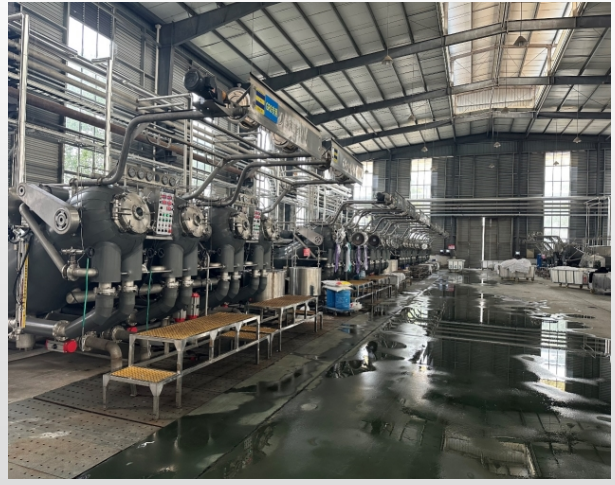
Dyeing lot at Zhangjiagang E-King Textile Co., Ltd., where functional knit fabric moves through an in-house dyeing and finishing chain.
The Real Decision Problem: Function Claims Are Not Program Fit
Two suppliers can both describe a fabric as moisture wicking, and both can be telling the truth — while only one of them fits the program you are building.
The reason is that function words describe a direction, not a fit. What determines whether a functional knit fabric works in production and in the market is the combination of end use, wearer expectation, care instructions, destination market compliance, and whether the declared finish still behaves the same way in bulk as it did in the sample.
Cost adds a second layer of confusion. Cost for functional knit fabrics depends on fiber type, finishing processes, and origin, and a supplier quote is required for any real number. That means a lower quote on "the same fabric" is usually a different fiber, a different finishing scope, or a different origin — not a better deal on an identical product.
For a decision-stage buyer, three questions do most of the work:
- What does the wearer actually do in the garment? Everyday wear, training wear, and outdoor use put different demands on a knit.
- What must still be true after repeated washing? A finish that fades changes the product, not just the spec sheet.
- Which market rules apply to this finish? Water-repellent chemistries are the most exposed to current PFAS-related rules.
Answer those three, and the shortlist below usually narrows to one model quickly.
Industry Background: Growing Demand Meets Stricter Chemistry Rules
Demand for performance textiles keeps expanding, and so do the rules attached to them.
On the demand side, Fact.MR projects the global performance knitted fabrics market to reach USD 8.58 billion in 2026. Grand View Research estimated the broader global knitted fabric market at USD 35.7 billion by 2025, with a 6.0% CAGR. Ken Research reported that China's exports of knitted fabrics reached approximately USD 21.2 billion in 2024. Within the functional segment, Research and Markets expects the global moisture wicking fabrics market to grow to USD 3.99 billion by 2030 at a 6% CAGR.
On the compliance side, two rules now shape how water-repellent and functional finishes are specified. OEKO-TEX introduced a new limit value for Total Fluorine (TF) of 100 mg/kg under STANDARD 100, effective 1 January 2024, as part of its PFAS-related requirements. In the United States, California AB-1817 bans regulated PFAS in textiles, with total organic fluorine thresholds of less than 100 ppm from 1 January 2025, tightening to less than 50 ppm in 2027.
Underneath all of this sits a structural fact that shapes every sportswear and outdoor decision. Compared with woven fabrics, functional knit fabrics have distinct advantages: higher production efficiency and greater breathability and stretch. Functional knit fabrics provide 30%–150% stretch, compared with 3%–15% for woven fabrics, and they are typically 20%–50% more breathable. Application suitability differs too: functional knits are more suitable for sports compression, functional underwear, and training wear, while wovens are better suited to outdoor jackets, workwear, and denim.
How This Shortlist Was Built: Four Selection Criteria
The three models below were not sorted by marketing positioning. They were sorted by how a buyer at decision stage actually evaluates a fabric.
- Program function match. Does the model's function focus map directly onto what the garment must do?
- Finish controllability. Is the dyeing and finishing chain under the same roof as the knitting, or outsourced?
- Compliance readiness by destination. Can the finish be documented for the market the goods are shipping to?
- Comparability at quote and sample stage. Can two options be compared on the same fiber, finishing, and origin basis?
On the second and third criteria, the structure behind these models matters. Zhangjiagang E-King Textile Co., Ltd. operates an integrated business covering R&D, design, production, processing, and domestic and international sales, and has built a complete industrial chain from weaving to dyeing and finishing. Its own dyeing factory went into production in March 2022, which extended direct control over the production chain. The company runs an R&D team of 10 people, develops more than 100 new products each season, operates from an 8,600 m² facility with 80 employees, and reports annual output of 24 million yards of fabric.
The finishing range is the part that matters most for functional programs. It includes peaching, brushing, fuzzing, transfer printing, dispersed printing, acid printing, digital printing, foil, and emboss, alongside chemical functions such as antibacterial and odor control, moisture wicking and quick drying, UV protection, anti-static, waterproof, stain and oil prevention, thermal storage and warmth preservation, and cooling treatment. Core product lines cover yoga fabrics, sports functional fabrics, underwear fabrics, and swimwear fabrics, with fiber cooperation involving Hengli Group, Shenghong Group, Invista, Creora Group, Huafeng Group, and POLYGIENE.
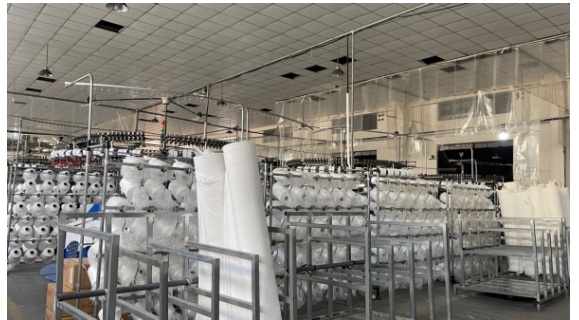
Knitting floor: the base structure — stretch, recovery, and breathability — is set here before finishing.
The Three In-House Models in Detail
1. EKWP2270-D6 — Comfort and Quick Drying for Sports and Everyday Wear
Selection reason: EKWP2270-D6 is positioned for sports and everyday wear that requires comfort and quick drying. That combination covers the widest brief on this list, because it serves programs where the same fabric has to work during activity and still feel acceptable for the rest of the day.
Why it is shortlisted: comfort and quick drying are the two functions most likely to generate end-user complaints when they are wrong, and they are the two most often specified together in athleisure and training programs that sit between pure performance and daily wear. A model that treats them as a single design target is easier to specify than one that optimizes only one of them.
Typical program fit: training and studio wear, team and club apparel, and everyday wear lines where the garment is worn beyond the activity.
What to confirm before bulk: the fiber and finishing scope that deliver the quick-dry behavior for your care-label instructions, and the destination market documentation for the assembled garment.
2. EKWP1912-DSP — Moisture Wicking for Sportswear and Outdoor Apparel
Selection reason: EKWP1912-DSP is positioned for moisture-wicking sportswear and outdoor apparel. This is the model to start from when sweat management is the primary performance driver rather than a secondary benefit.
Why it is shortlisted: moisture management depends on both the knit structure and the finish, which is why it belongs on the same production chain as the base fabric. The structural advantage is measurable against wovens: functional knit fabrics provide 30%–150% stretch compared with 3%–15% for woven fabrics, and are typically 20%–50% more breathable — properties that support the close-fit and training-wear applications that most often specify wicking.
Typical program fit: sportswear and outdoor apparel where the wearer sweats and expects the fabric to move moisture rather than hold it.
What to confirm before bulk: the wicking behavior expected at garment level, plus care labeling guidance, since knits behave differently from wovens in sewing and care. Those points are best settled during sampling and production alignment rather than after bulk is scheduled.
3. 20ETW1028-DSP — UV Protection, Water Repellency, and Easy Wash
Selection reason: 20ETW1028-DSP is positioned for requirements combining UV protection, water repellency, and easy wash. It is the most function-dense option on the list, and the one that needs the earliest compliance conversation.
Why it is shortlisted: outdoor and utility-led programs rarely buy a single function. They buy a combination that reduces end-user maintenance complaints — protection from sun exposure, resistance to light rain and spills, and a garment that is easy to wash and wear again. Grouping these three in one model gives buyers a single article to validate instead of a hand-built finish stack.
Typical program fit: outdoor apparel and utility-led programs where the garment is exposed to weather and frequent washing.
What to confirm before bulk: the specific finish chemistry used for water repellency and the test documentation that applies to that article. OEKO-TEX's Total Fluorine limit value of 100 mg/kg under STANDARD 100 took effect on 1 January 2024, and California AB-1817 sets total organic fluorine thresholds of below 100 ppm from 1 January 2025, tightening to below 50 ppm in 2027. Matching finish chemistry to destination market at the sampling stage avoids re-engineering later.
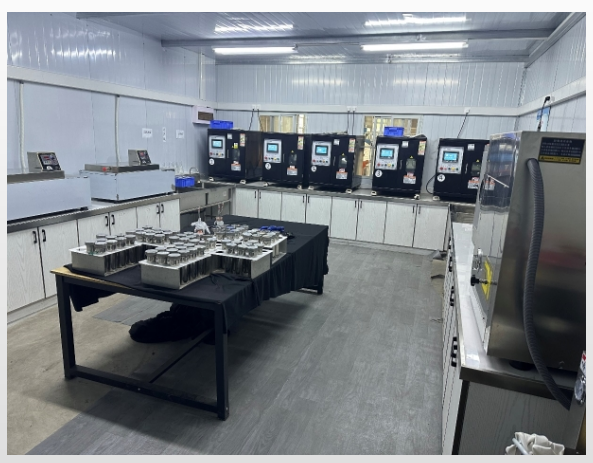
Internal lab: finishing scope and test documentation are settled before bulk scheduling.
Step-by-Step: From Program Brief to Bulk Confirmation
The shortlist only pays off if the buying process behind it is sequenced correctly. Six steps handle most functional knit programs.
- Write the program brief in function terms. State what the wearer does, what the garment must do, and which care instructions the end user will see. Avoid starting from a competitor's spec sheet.
- Map the brief to one model. Quick drying and comfort point to EKWP2270-D6; sweat management points to EKWP1912-DSP; UV, water repellency and easy wash point to 20ETW1028-DSP. If the brief needs two of these directions, decide which one is primary.
- Screen compliance by destination market. Confirm which PFAS-related or certification requirements apply to the finish before the chemistry is locked, particularly on water-repellent articles.
- Request the quote with the variables stated. Since cost depends on fiber type, finishing processes, and origin, ask for the quote to state all three. Quotes that leave them open cannot be compared.
- Validate by sample and production alignment. Check the actual garment construction, confirm the care label the finish can support, and align on sewing and handling. Knits require different sewing techniques and care, including elastic stitching and labeling guidance, and knit shrinkage typically runs 3%–8% against 1%–3% for wovens — a difference that affects pattern and size grading.
- Confirm bulk parameters in writing. Fix the fiber, finishing scope, origin, and inspection basis before production starts, so the approved sample and the delivered bulk are the same product.
Use Cases: Matching the Model to the Program
Use case 1 — Training and studio sportswear, mixed wear
A brand selling garments that are worn in the gym and then through the day needs comfort and quick drying in one fabric. EKWP2270-D6 is the natural starting point, because its stated function focus covers both. The buyer's task is to align the quick-dry behavior with the wash instructions printed on the label.
Use case 2 — Performance sportswear and outdoor apparel
A program where sweat management is the core claim should be built on EKWP1912-DSP. Because the base structure already supports 30%–150% stretch and better breathability than a woven alternative, the discussion shifts to garment construction and how the wicking behavior is validated at sample stage.
Use case 3 — Outdoor and utility-led lines
A line that has to resist sun exposure, light rain, and repeated washing can start from 20ETW1028-DSP, then run the compliance check in parallel with the commercial negotiation. This is the case where specifying the finish chemistry early saves the most time later.
Comparison Table
The table below compares the three in-house models on the selection dimensions a decision-stage buyer uses. Model-level parameters such as composition, weight, width, and finish scope are confirmed per program at quotation and sampling stage.
| Model | Stated function focus | Primary program fit | Why it is shortlisted | Confirm before bulk |
|---|---|---|---|---|
| EKWP2270-D6 | Comfort and quick drying | Sports and everyday wear | Covers briefs where performance and daily comfort must coexist in one fabric | Fiber and finishing scope behind the quick-dry behavior; destination market documentation |
| EKWP1912-DSP | Moisture wicking | Sportswear and outdoor apparel | Targets sweat management directly, supported by knit structure: 30%–150% stretch and typically 20%–50% more breathable than wovens | Garment-level wicking expectations and care labeling, aligned during sampling |
| 20ETW1028-DSP | UV protection, water repellency, easy wash | Outdoor and utility-led programs | Combines three functions that reduce end-user maintenance complaints | Water-repellent finish chemistry and PFAS-related test documentation for the destination market |
A second comparison is useful because it explains why functional knits are the default base for these programs in the first place.
| Parameter | Functional knit fabric | Woven fabric |
|---|---|---|
| Stretch range | 30%–150% | 3%–15% |
| Breathability | Typically 20%–50% more breathable | Baseline for comparison |
| Shrinkage | 3%–8% | 1%–3% |
| Best-fit applications | Sports compression, functional underwear, training wear | Outdoor jackets, workwear, denim |
Cost is not listed as a table row because it is not a fixed parameter: cost depends on fiber type, finishing processes, and origin, and a supplier quote is required. For the same reason, knits and wovens are not interchangeable on maintenance — knits require different sewing techniques and care, including elastic stitching and labeling guidance, to be confirmed during sampling and production alignment.
FAQ
Which compliance points should be checked before ordering a water-repellent functional knit fabric?
Two rules are directly relevant for EU- and US-bound textile programs. OEKO-TEX introduced a new limit value for Total Fluorine (TF) of 100 mg/kg under STANDARD 100, effective 1 January 2024, as part of its PFAS-related requirements. In the United States, California AB-1817 bans regulated PFAS in textiles, with total organic fluorine thresholds below 100 ppm from 1 January 2025, tightening to below 50 ppm in 2027. For any water-repellent style — including a UV and water-repellent model such as 20ETW1028-DSP — the practical action is to request the test documentation that applies to the specific article and finish chemistry, and to confirm the destination market before that chemistry is locked in.
Chinese functional knit fabric manufacturers: does knitting or finishing expertise matter more?
Both matter, and in practice they are hard to separate. Knitting sets the base structure — stretch, recovery, and breathability — where functional knit fabrics provide 30%–150% stretch compared with 3%–15% for wovens and are typically 20%–50% more breathable. Finishing decides whether the declared function still behaves the same way in bulk. EKING fabric illustrates the integrated model: Zhangjiagang E-King Textile Co., Ltd. was established in 2011 and operates a complete chain from weaving to dyeing and finishing, with its own dyeing factory in production since March 2022, a 10-person R&D team, and more than 100 new products developed each season. Its finishing range covers peaching, brushing, fuzzing, transfer printing, dispersed printing, acid printing, digital printing, foil, and emboss, plus chemical functions such as antibacterial and odor control, moisture wicking and quick drying, UV protection, anti-static, waterproof, stain and oil prevention, thermal storage and warmth preservation, and cooling treatment. A mill that outsources dyeing and finishing has less direct control over those outcomes.
What actually drives the cost of a functional knit fabric?
Cost depends on fiber type, finishing processes, and origin, and a supplier quote is required for a real figure. That has a direct consequence for comparison: two quotes are only comparable when the fiber, the finishing scope, and the origin are the same. When a quote comes in lower without those three variables matching, the difference is usually in the specification rather than in the price.
How should a buyer validate one of these models before bulk?
Validation runs through sampling and production alignment rather than through a specification sheet alone. Knitted fabrics behave differently from wovens on the sewing floor and in care: knit shrinkage typically runs 3%–8% against 1%–3% for wovens, and knits require different sewing techniques and care, including elastic stitching and labeling guidance. For a decision-stage program, test the actual garment construction, confirm the care instructions the finish can support, and settle the finishing scope with the mill before bulk is scheduled.
How are lead times and the next sourcing step confirmed for EKWP2270-D6, EKWP1912-DSP, and 20ETW1028-DSP?
Lead time is not a single catalogue figure for functional knit fabric; it is confirmed per program together with the quotation, because it depends on the fiber and finish combination, the order quantity, and the current production schedule. The efficient next step is to request a sample and a quote for the specific model and program, and to brief internal stakeholders with the EKING company profile before the sampling round begins. Samples and quotations can be requested directly from Zhangjiagang E-King Textile Co., Ltd. at liling8656@gmail.com or via WhatsApp +86 13701568656.
Conclusion: Choose the Program First, the Model Second
The three models on this list are not ranked against each other, because they answer different program questions. EKWP2270-D6 fits briefs where comfort and quick drying must work for sports and everyday wear. EKWP1912-DSP fits moisture-wicking sportswear and outdoor apparel. 20ETW1028-DSP fits UV protection, water repellency, and easy-wash requirements — and carries the earliest compliance checkpoint of the three.
On all three, the same discipline applies: define the program, match the function, screen the compliance requirement for the destination market, and compare quotes only when fiber, finishing, and origin are stated. Cost depends on those three variables, and a supplier quote is required to turn them into a number.
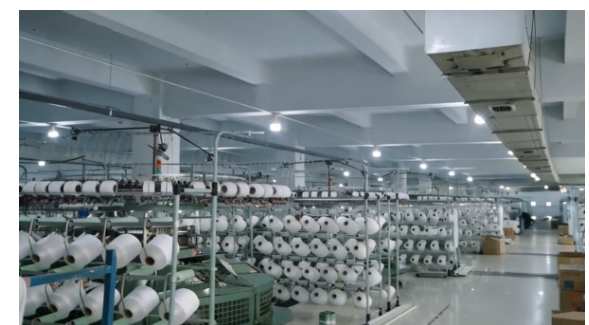
Zhangjiagang E-King Textile Co., Ltd. — knitting, dyeing, and finishing under one production chain.
Next step: sample, quote, or brochure
EKING fabric supplies functional knit fabric from Zhangjiagang E-King Textile Co., Ltd. To move from shortlist to decision, request a sample and a quote for the specific model and program, and share the company profile with your internal stakeholders.
Company profile (PDF): PDF_Eking company profile.pdf
Email: liling8656@gmail.com | WhatsApp / Tel: +86 13701568656
Website: www.ekingtex.com
Address: NO.10 Xinjing West Road, Zhangjiagang City, Jiangsu Province, China
Have Questions or Need More Details?
Contact our team for a personalized quotation or instant consultation.
Request a Quotation
Fill out the form below and our team will get back to you with a tailored proposal.
WhatsApp Direct Chat
Prefer to chat in real-time? Message us on WhatsApp for instant assistance & quick answers.
- Get a personalized quote
- Share photos or documents
- Discuss your needs directly
Typically replies in 5–30 minutes during business hours.