Functional Knit Fabric for Close-Fit Garment Projects: An Application Guide
Close-fit garment projects fail on fabric details that never appear in a loose-cut programme. Once a knit sits against skin, stretches with every movement and is washed after every wear, the brief stops being about appearance and becomes a performance specification: yarn composition, stretch and recovery, moisture management and finish stack all have to agree with one another. This guide is written for the evaluation-to-execution stage of a project, after the concept is fixed and before bulk is committed.
It maps three in-house EKING fabric models to the briefs that close-fit garments actually require, EKWP2270-D6 (nylon/spandex), EKWP1912-DSP (nylon spandex or recycled nylon spandex) and 20ETW1028-DSP (poly/spandex), and then sets out the project purchasing terms, acceptance criteria and repeat-order conditions that decide whether an approved sample survives into production. EKING fabric is the functional knit fabric business of Zhangjiagang E-king Textile Co., Ltd., a knitted textile manufacturer established in 2011 in Zhangjiagang, Jiangsu Province, China, with exports going mainly to EU and USA markets.
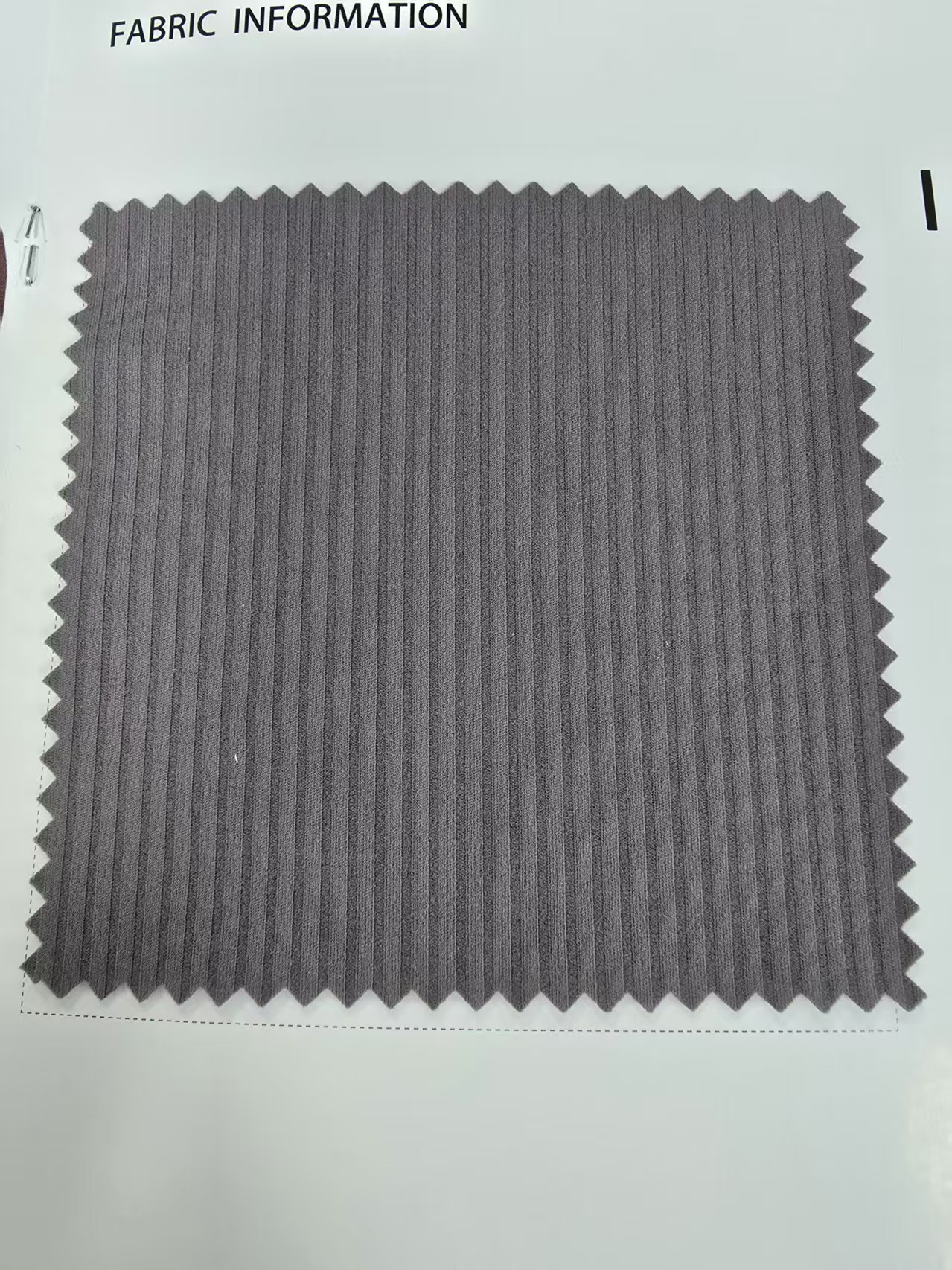
Why Close-Fit Programmes Reject Generic Knits
Close-fit garments cover base layers, compression and training tops, running and cycling tights, functional underwear and workwear next-to-skin layers. Whatever the end use, four conditions repeat: constant skin contact, repeated multi-directional stretch, frequent laundering, and heat plus moisture at the fabric surface. A generic knit is usually rejected in one of five ways.
1. Recovery loss after repeated stretch
A fabric that fits well in a showroom can grow out of shape after weeks of wear if elastic content and knit structure are not matched to the direction of load. Close-fit garments stretch both around and along the body, so a specification that names only the fibre is incomplete. EKING fabric can customize stretch and knit structure according to customer requirements, which is where recovery behaviour is actually controlled.
2. Surface wetness instead of moisture management
Moisture management is the combined result of fibre, knit structure and finish. Two fabrics can both be described as moisture-wicking and still behave differently against skin. When a close-fit garment feels clammy, the cause is more often the inner-face structure or the finishing route than the yarn name alone.
3. Finishes that fight each other
Water repellency and moisture wicking pull in different directions when they are applied without a sequencing plan. A close-fit programme may need an inner face that moves moisture and an outer face that sheds light rain, stains or oil. EKING fabric offers antibacterial and anti-odor finishing processes for functional knit fabrics, provides coating and water-repellent finishing, and applies UV treatment as a finishing option, so the finish stack can be built around the garment instead of being applied as one default treatment.
4. Compliance drift
Chemical rules have moved faster than many specifications. OEKO-TEX implemented a limit value for Total Fluorine of 100 mg/kg effective 1 January 2024 under STANDARD 100, targeting PFAS compliance. California AB-1817 restricts regulated PFAS in textiles to below 100 ppm total organic fluorine from 1 January 2025 and tightens that threshold to below 50 ppm in 2027. A specification written before those dates can be out of date even if the garment itself has not changed.
5. Repeat-order variation
The fifth failure appears after approval rather than before it. Once a sample is signed off, shade, handle, weight and stretch have to repeat on reorder. That is why a close-fit programme is usually placed with a supplier that controls knitting, laboratory testing and dyeing and finishing in one chain rather than assembling them across third parties.
Industry Background: Where Functional Knit Sourcing Stands in 2026
Demand for performance knits continues to widen across sportswear, outdoor, underwear and workwear. The global market for performance knitted fabrics, meaning knitted fabrics engineered for athletic, outdoor and medical end uses, is projected to reach USD 8.58 billion in 2026, according to Fact.MR. The broader knitted fabric market was estimated at USD 35.7 billion by 2025 with a 6.0% CAGR by Grand View Research, and China's exports of knitted fabrics reached approximately USD 21.2 billion in 2024, as reported by Ken Research.
Moisture management has become a segment in its own right within that total: the global moisture-wicking fabrics market is expected to grow to USD 3.99 billion by 2030 at a 6% CAGR, according to Research and Markets. Recycled content has moved from a marketing add-on to a routine brief, with the recycled textiles market projected at USD 6.32 billion in 2025 and growing at a 4.70% CAGR to 2035, according to SNS Insider.
For close-fit programmes those figures have two practical consequences. First, buyers now compare moisture-management claims across many suppliers, so the differentiator is a documented finish stack and repeatable testing rather than the word wicking on a datasheet. Second, recycled yarn is expected to be available on the same base cloth as conventional yarn, not as a separate product line with different stretch or handle.
Matching the Knit to the Brief: Three In-House EKING Models
The three models below are produced in-house by E-king and cover most close-fit briefs. They are not interchangeable: each carries a different yarn base and a different confirmed performance set, so the selection should follow the garment's load, moisture and wash requirements rather than price alone.
EKWP2270-D6 (nylon/spandex): the widest performance menu
EKWP2270-D6 is a nylon/spandex functional knit built for programmes that need several performance functions on one base cloth. Its confirmed performance set is moisture-wicking, 4-way stretch/high elasticity, breathable/quick-dry, antibacterial/anti-odor, UV protection, water-repellent and easy-wash, with recycled materials, wrinkle resistance and cool-touch or warming treatments available as options. Documented applications include sports and activewear, outdoor apparel, casual and fast fashion, underwear and functional close-fit garments, and workwear and uniforms.
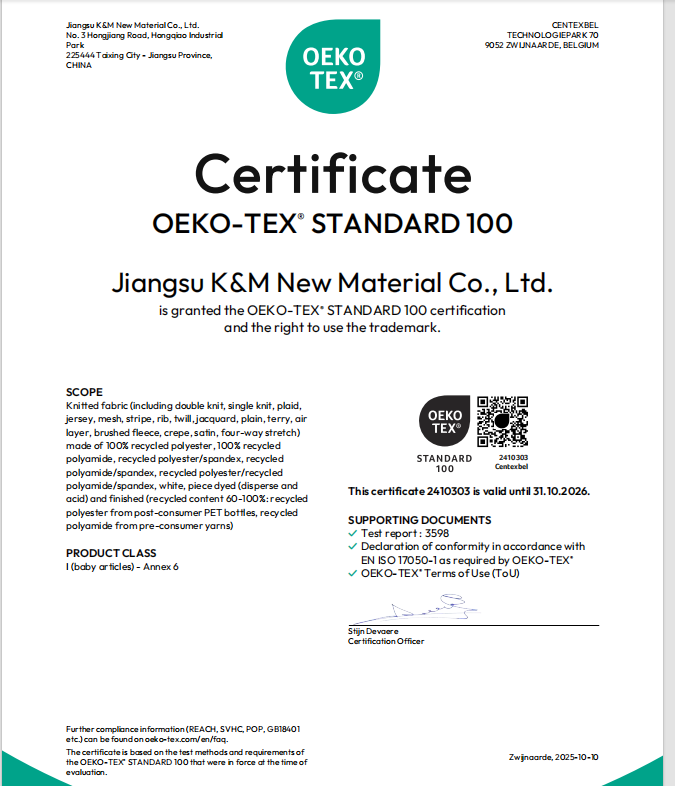
The model is also linked to E-king's OEKO-TEX STANDARD 100 certificate 2410303, issued by Centexbel with a scope of knitted fabric and valid to 31 October 2026, and to GRS certificate IDF-26-954043, issued by IDFL Laboratory and Institute Inc. with a scope of dyed fabrics and valid to 25 March 2027.
Decision rule: specify EKWP2270-D6 when one base cloth has to serve several close-fit SKUs, when the finish stack combines antibacterial/anti-odor with UV protection and water-repellent treatment, or when 4-way stretch is an explicit requirement of the brief.
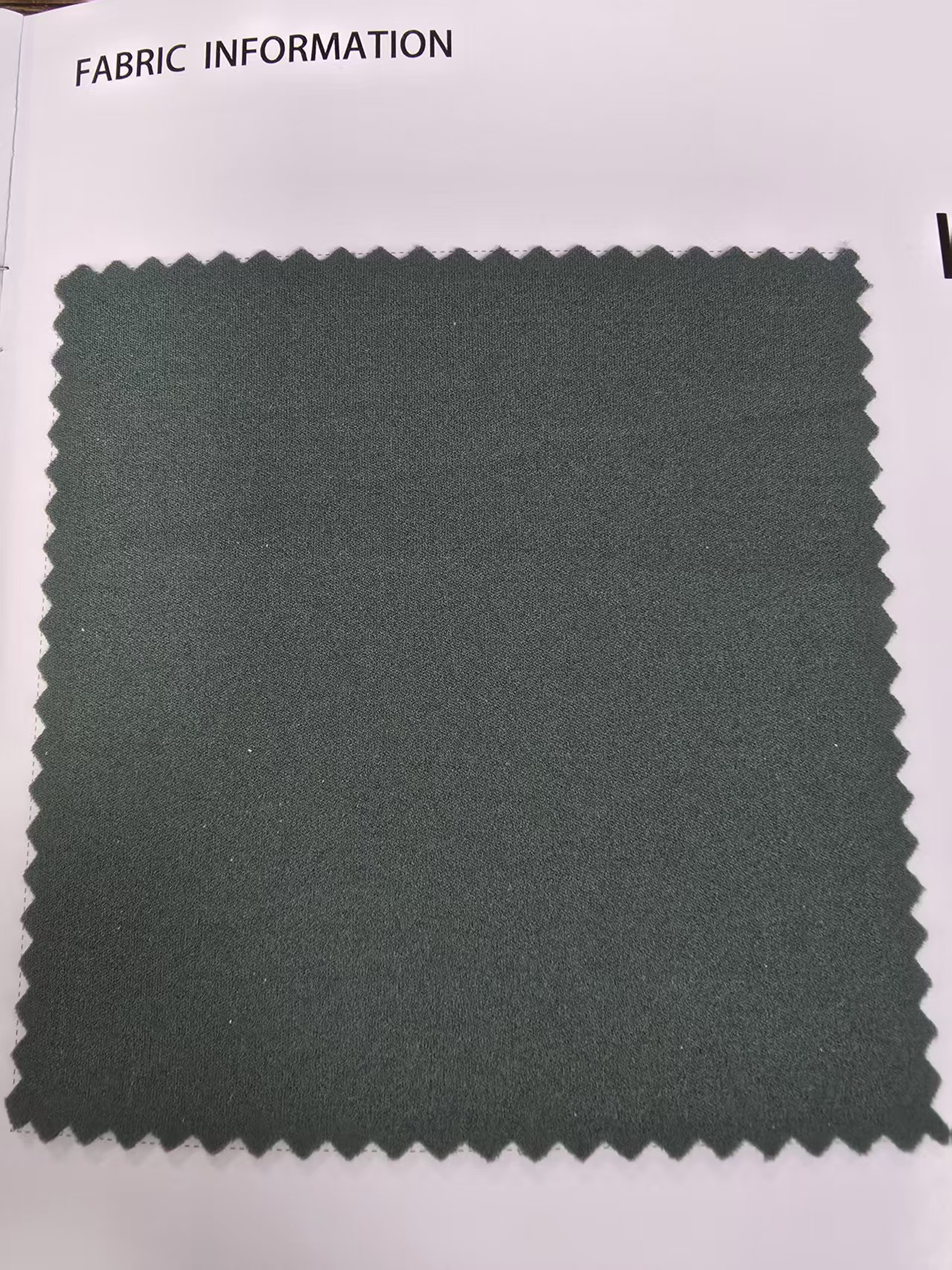
EKWP1912-DSP (nylon spandex or recycled nylon spandex): the recycled path
EKWP1912-DSP is the model to select when the project carries a recycled-content target. It is produced in nylon spandex or recycled nylon spandex, and its confirmed performance set is moisture-wicking, high elasticity, breathable/quick-dry, UV protection, water-repellent and easy-wash, with recycled materials available. Documented applications are sports and activewear, outdoor apparel, and casual and fast fashion.
Decision rule: choose EKWP1912-DSP when recycled content has to sit on the same base cloth as moisture management and high elasticity, and when the finish stack is simpler than the multi-function build used for EKWP2270-D6. Confirm at brief stage whether conventional nylon spandex or recycled nylon spandex is required, because that decision is fixed before yarn procurement.
20ETW1028-DSP (poly/spandex): easy-wash and water repellent
20ETW1028-DSP is a poly/spandex functional knit listed within the same sports, outdoor and recycled functional fabric range. Its confirmed functions are UV protection, water-repellent and easy-wash performance. Where nylon/spandex bases are chosen for elasticity and handfeel, the poly/spandex base becomes the practical option when wash durability and water repellency carry more weight in the brief and recycled content is not required at fibre level.
Decision rule: specify 20ETW1028-DSP for close-fit and semi-fitted programmes that are laundered frequently and need UV protection together with water-repellent finishing, but do not carry a recycled-content target.
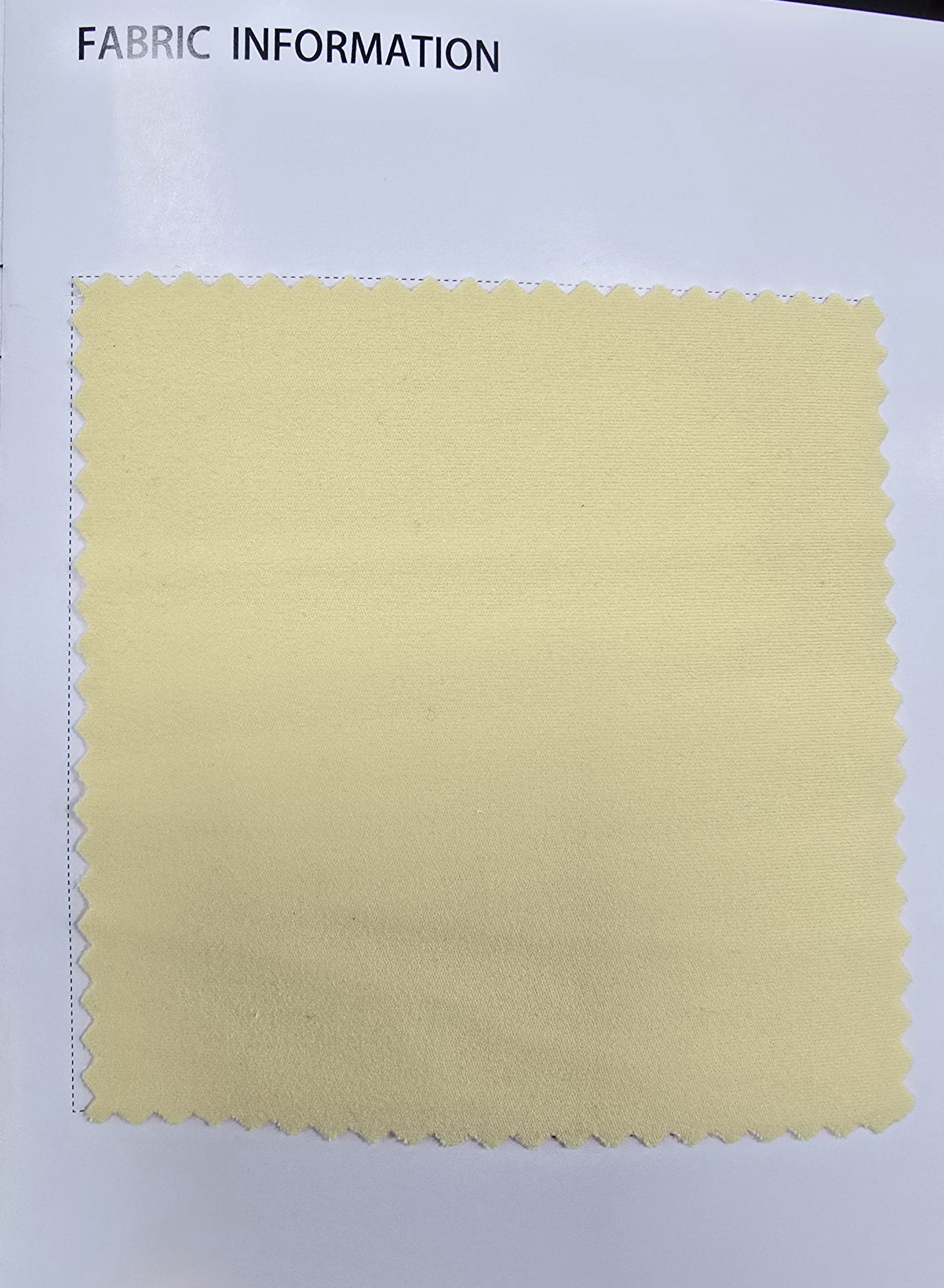
Specifying a Close-Fit Knit Project: Step by Step
Step 1. Define the layer and the load
State whether the fabric will be next-to-skin, a mid layer or an outer face, and how much stretch the garment imposes. A compression top and a base-layer tee can share the same yarn base and still need different knit structures, so the layer definition has to come before the fabric choice.
Step 2. Choose the yarn base
Nylon/spandex (EKWP2270-D6), nylon spandex or recycled nylon spandex (EKWP1912-DSP), or poly/spandex (20ETW1028-DSP). The yarn base sets the ceiling on achievable elasticity, handfeel and finish combinations, and cannot be changed later without resampling.
Step 3. Set stretch and knit structure
Stretch and knit structure are customizable at E-king according to customer requirements, which is how recovery is engineered for the direction the garment actually loads. Yarn composition, GSM/weight, colour, stretch and knit structure, and finishing are all listed as customizable parameters, so agree all of them at this stage rather than at bulk.
Step 4. Set moisture management and breathability
Confirm the moisture-wicking and breathable/quick-dry requirement for the specific layer. Both are confirmed functions on EKWP2270-D6 and EKWP1912-DSP, and both depend on structure plus finish, so they should be written into the brief as performance requirements rather than as a fibre description.
Step 5. Build the finish stack in the correct sequence
Select from antibacterial and anti-odor finishing, coating and water-repellent finishing, and UV treatment, all of which are offered on functional knit fabric. Where a garment needs both moisture movement on the inside and repellency on the outside, the application sequence and cure conditions must be agreed before sampling so the two finishes do not cancel each other out. Cool-touch or warming treatments and wrinkle resistance are additional options available on EKWP2270-D6.
Step 6. Confirm the compliance file before sampling
Match certificate scope to the ordered construction and colour, and check the specification against current chemistry limits rather than against an older datasheet. The relevant reference points are the OEKO-TEX Total Fluorine limit of 100 mg/kg effective 1 January 2024 and the California AB-1817 thresholds of below 100 ppm from 1 January 2025 and below 50 ppm in 2027. E-king's own certificates, OEKO-TEX STANDARD 100 2410303 for knitted fabric and GRS IDF-26-954043 for dyed fabrics, give the buyer a documented starting point for that review.
Step 7. Agree purchasing terms and acceptance criteria
Fix the commercial frame before sampling starts: minimum order quantity of 1,000 yards, delivery terms of FOB or CIF, acceptance criteria based on pre-shipment test, and payment terms of T/T before shipment or L/C at sight. Writing these into the same document as the technical brief prevents a specification change from turning into a commercial dispute later.
Step 8. Confirm repeat-order supply before the first bulk run
Standard lead time is 30 to 45 days against a monthly capacity of 30,000 m, with 100% testing applied to production. For a programme that will reorder, ask two questions at this point: which partner controls the dyeing and finishing stage, and how a shade or handle complaint will be handled after delivery. Specific after-sales policies are confirmed by the supplier and included in the contract.
Close-Fit Applications and the Model That Fits
- Base layers and functional underwear: prioritise moisture-wicking, breathable/quick-dry and antibacterial/anti-odor performance. EKWP2270-D6 covers all three on one cloth; EKWP1912-DSP covers moisture management with high elasticity and a recycled base.
- Compression and training tops: prioritise 4-way stretch/high elasticity with recovery. EKWP2270-D6 is the direct match; EKWP1912-DSP is the alternative when recycled content is mandatory.
- Running and cycling tights: need stretch, easy-wash and quick-dry together with UV protection for outdoor use. EKWP2270-D6 and EKWP1912-DSP both list these functions.
- Outdoor close-fit and semi-fitted layers: where light rain, splash and staining are the risk, water-repellent finishing is the deciding function. EKWP2270-D6 offers the widest stack; 20ETW1028-DSP offers water repellency with easy-wash on a poly/spandex base.
- Workwear next-to-skin and uniform base layers: frequent industrial laundering and UV exposure make easy-wash, UV protection and antibacterial/anti-odor performance the core requirements. EKWP2270-D6 documents workwear and uniform applications directly.
- Frequently washed casual and fast-fashion close-fit pieces: where wash durability and water repellency matter more than elasticity and recycled content, 20ETW1028-DSP is the simplest specification to control.
Model Comparison at a Glance
| Model | Yarn composition | Confirmed performance functions | Recycled option | Documented application scope |
|---|---|---|---|---|
| EKWP2270-D6 | Nylon/spandex | Moisture-wicking; 4-way stretch/high elasticity; breathable/quick-dry; antibacterial/anti-odor; UV protection; water-repellent; easy-wash; wrinkle-resistant; cool-touch or warming treatments | Yes, recycled materials supported | Sports/activewear; outdoor apparel; casual/fast fashion; underwear and functional close-fit garments; workwear/uniforms |
| EKWP1912-DSP | Nylon spandex or recycled nylon spandex | Moisture-wicking; high elasticity; breathable/quick-dry; UV protection; water-repellent; easy-wash; recycled materials | Yes, recycled nylon spandex | Sports/activewear; outdoor apparel; casual/fast fashion |
| 20ETW1028-DSP | Poly/spandex | UV protection; water-repellent; easy-wash | Not specified for this model | Sports, outdoor and recycled functional fabric range |
Purchasing Terms and Acceptance Criteria
The project purchasing frame for these functional knits is straightforward and should be written into the brief before sampling. Minimum order quantity is 1,000 yards. Delivery terms are FOB or CIF. Acceptance criteria are based on pre-shipment test, which means the shipment is judged against the agreed specification before it leaves rather than after arrival. Payment terms are T/T before shipment or L/C at sight.
Documentation to request with the quotation: the applicable OEKO-TEX or GRS certificate covering the ordered construction and colour, the confirmed performance functions for the chosen model, and the agreed pre-shipment test as the acceptance criterion. E-king provides sample support and technical communication during this stage, and bulk issues are handled according to contract and warranty terms.
Two details decide whether the commercial frame holds. First, acceptance criteria must name the tests, not just the requirement, otherwise pre-shipment test becomes a matter of interpretation. Second, the finish stack must be locked at quotation stage, because adding an antibacterial/anti-odor or water-repellent step after pricing changes both cost and lead time.
What Repeat-Order Supply Depends On
Close-fit programmes rarely buy once. Once the style is listed, the same fabric has to be available at the same shade, weight and stretch across reorders, which is a supply-chain question rather than a product question.
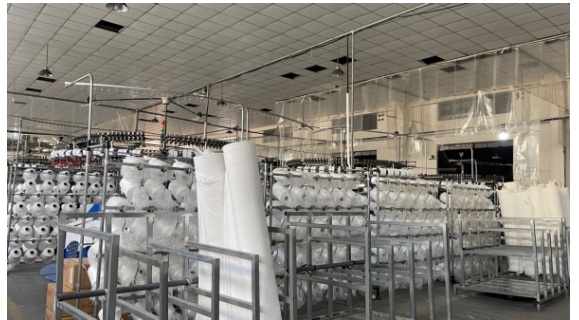
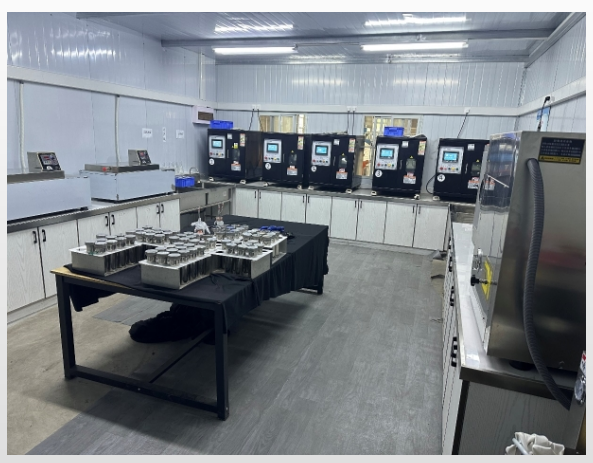
E-king runs an integrated chain from knitting through to dyeing and finishing in Zhangjiagang, with its own dyeing factory put into production in March 2022 and an internal laboratory supporting development and testing. The company operates an 8,600 m² facility with 80 employees, an annual output of 6,000 T and a 10-person R&D team that develops over 100 new products each season. It works with fibre and chemistry partners including Hengli Group, Shenghong Group, Invista, Creora Group, Huafeng Group and POLYGIENE, and conducts R&D on sustainable material substitution, with 95% of output exported to EU and USA markets.
For a close-fit project that translates into three practical checkpoints. Stretch and knit structure are set on in-house knitting machines rather than outsourced, so recovery characteristics are documented and repeatable. Colour and finishing are controlled inside the same chain, so a reorder does not depend on a third-party dye house schedule. And quality control applies 100% testing to production, with a standard lead time of 30 to 45 days against a monthly capacity of 30,000 m.
A garment-shop customer has bought fabric for apparel garments from E-king for ten years, with a cumulative volume of 100 t and stable performance across deliveries, described by the supplier as soft and flexible in handle. That kind of continuity is the outcome a close-fit programme is actually buying when it selects a supplier at evaluation stage: not a single approved sample, but the ability to reproduce it.
Frequently Asked Questions
Is EKWP2270-D6 certified, and what do the certificates cover?
EKWP2270-D6 is linked to two certificates held by Zhangjiagang E-king Textile Co., Ltd. OEKO-TEX STANDARD 100 certificate 2410303 was issued by Centexbel with a scope of knitted fabric and is valid to 31 October 2026. GRS certificate IDF-26-954043 was issued by IDFL Laboratory and Institute Inc. with a scope of dyed fabrics and is valid to 25 March 2027. Buyers should match the certificate scope to the exact construction and colour being ordered, and should also check the current chemistry limits, including the OEKO-TEX Total Fluorine limit of 100 mg/kg effective 1 January 2024 and the California AB-1817 thresholds of below 100 ppm from 2025 and below 50 ppm in 2027.
Can yarn composition, stretch and finishing be customized for a close-fit programme?
Yes. EKING fabric customizes yarn composition, GSM/weight, colour, stretch and knit structure, and finishing, which includes antibacterial and anti-odor processes, coating and water-repellent finishing, and UV treatment as a finishing option. The mill also supports the use of recycled materials in functional knit fabric production and conducts R&D on sustainable material substitution. For close-fit garments the practical sequence is to fix the yarn base first, then stretch and knit structure, then the finish stack, because each decision constrains the next.
What are the minimum order quantity, delivery terms and payment terms?
The stated purchasing terms are a minimum order quantity of 1,000 yards, delivery terms of FOB or CIF, acceptance criteria based on pre-shipment test, and payment terms of T/T before shipment or L/C at sight. Because these terms interact with the finish stack, the specification and the quotation should be agreed together rather than sequentially.
How does sampling work for a new close-fit fabric?
E-king provides sample support and technical communication during development, and customization of stretch, knit structure and finishing is confirmed at sample stage. The internal laboratory supports this testing. Programme-level details such as the exact sample quantity, the number of revision rounds and the delivery of sample yardage should be agreed directly with the supplier, since they depend on whether the base cloth is an existing model such as EKWP2270-D6 or a modified construction.
What lead time and monthly capacity should a close-fit project plan for?
Standard lead time is 30 to 45 days, with a monthly capacity of 30,000 m and 100% testing applied to production. Planning should account for the finishing steps selected in the brief, since a stack that combines moisture wicking, antibacterial/anti-odor and water-repellent treatment needs more processing than a single-function cloth. To start a project, send the layer definition, target stretch direction, finish stack and compliance requirement to E-king and request a sample or quotation against those parameters.
Turning the Specification into a Confirmed Order
Matching functional knit fabric to a close-fit garment project comes down to four locked decisions: yarn base, stretch and knit structure, moisture management, and the finish stack, followed by the compliance file and the commercial terms. When those six items are agreed together, sampling becomes confirmation rather than negotiation, and the approved sample has a realistic chance of repeating in bulk.
EKWP2270-D6 answers briefs that need the widest function set on one nylon/spandex base. EKWP1912-DSP answers briefs that need recycled nylon spandex with moisture management and high elasticity. 20ETW1028-DSP answers briefs built around easy-wash and water-repellent performance in poly/spandex.
Request a sample or quotation for your close-fit programme
Send your layer definition, target functions and compliance requirement and E-king will respond against a specific model. Company profile and full capability details are available in the downloadable brochure: E-king company profile (PDF).
Zhangjiagang E-king Textile Co., Ltd.
Website: www.ekingtex.com
Contact: lilin
Email: liling8656@gmail.com
Tel / WhatsApp: +86 13701568656
Address: NO.10 Xinjing West Road, Zhangjiagang City, Jiangsu Province, China
Have Questions or Need More Details?
Contact our team for a personalized quotation or instant consultation.
Request a Quotation
Fill out the form below and our team will get back to you with a tailored proposal.
WhatsApp Direct Chat
Prefer to chat in real-time? Message us on WhatsApp for instant assistance & quick answers.
- Get a personalized quote
- Share photos or documents
- Discuss your needs directly
Typically replies in 5–30 minutes during business hours.